

The Manchester Neuromuscular Research Group was established in 2024 to facilitate collaborative neuromuscular research in the Greater Manchester area. The group brings together research-active consultant neurologists with special interest in neuromuscular conditions based at Manchester Centre for Clinical Neuroscience. MCCN is one of the largest neuroscience departments in the UK, covering a population of 2.5 million, with specialist clinics in muscle disorders including inflammatory, genetic and degenerative myopathies neuromuscular junction disorders including myasthenia gravis and disorders of the peripheral nerve including inflammatory and genetic neuropathies.
The group is headed by Dr James Lilleker (muscle lead), Dr Katherine Dodd (neuromuscular junction lead), and Dr Ryan Keh (peripheral nerve lead).
The MNRG have a growing portfolio of neuromuscular clinical trials and facilitate biomarker research through established collections within the Northern Care Alliance Research Collection biobank and the Manchester Cancer Research Centre Biobank. Current and past research includes identification of biomarkers and disease mechanisms in inflammatory neuropathies, myasthenia gravis and inclusion body myositis, and MRI imaging in inflammatory myopathies.
Patients set research priorities at neuromuscular research engagement day
The Manchester Neuromuscular Research Group held its first patient and family research engagement day on Friday 7 August at the Novotel Manchester West in Worsley. People living with neuromuscular conditions came along with their carers and families. They spent the day with the clinicians and researchers who work on those conditions.
Consultant neurologist James Lilleker opened the morning. He explained what patient involvement in research means in practice, what a clinical trial is, and why it matters that patients help shape one. He gave real examples from the group’s own work. Consultant neurologists Katherine Dodd and Ryan Keh followed. Each described the questions their research is trying to answer and where patients could fit into the next stage.
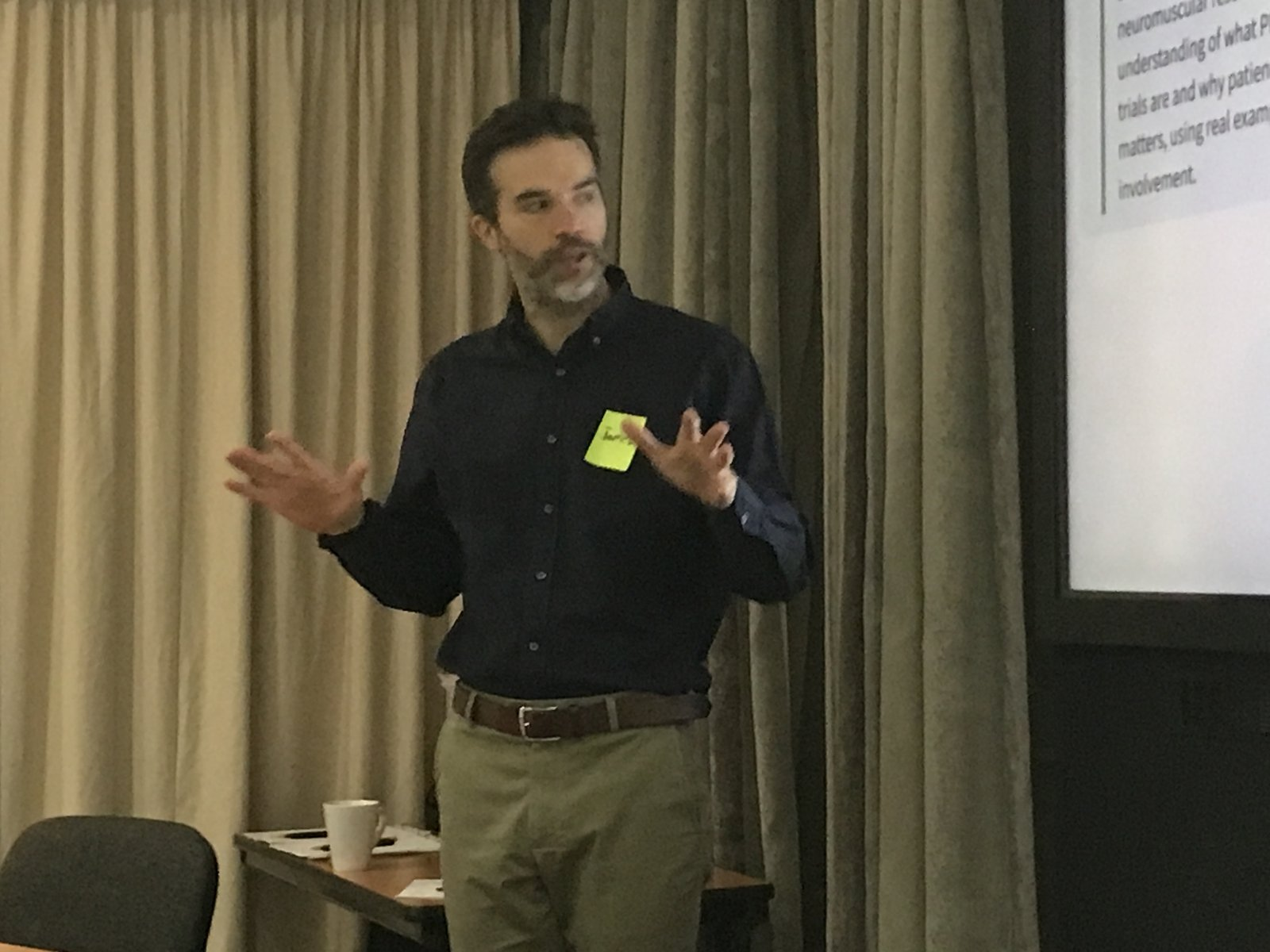
Consultant neurologist James Lilleker opens the morning with what patient involvement in research means in practice.
Kathryn Slevin then explained what taking part in a clinical trial involves for a patient, and which neuromuscular trials the group is running or about to open. Paul Morgan, whose team collaborates with the group on myositis, closed the morning. He outlined the projects under way and asked the room which parts of that work could be, or already are, informed by patients and carers.
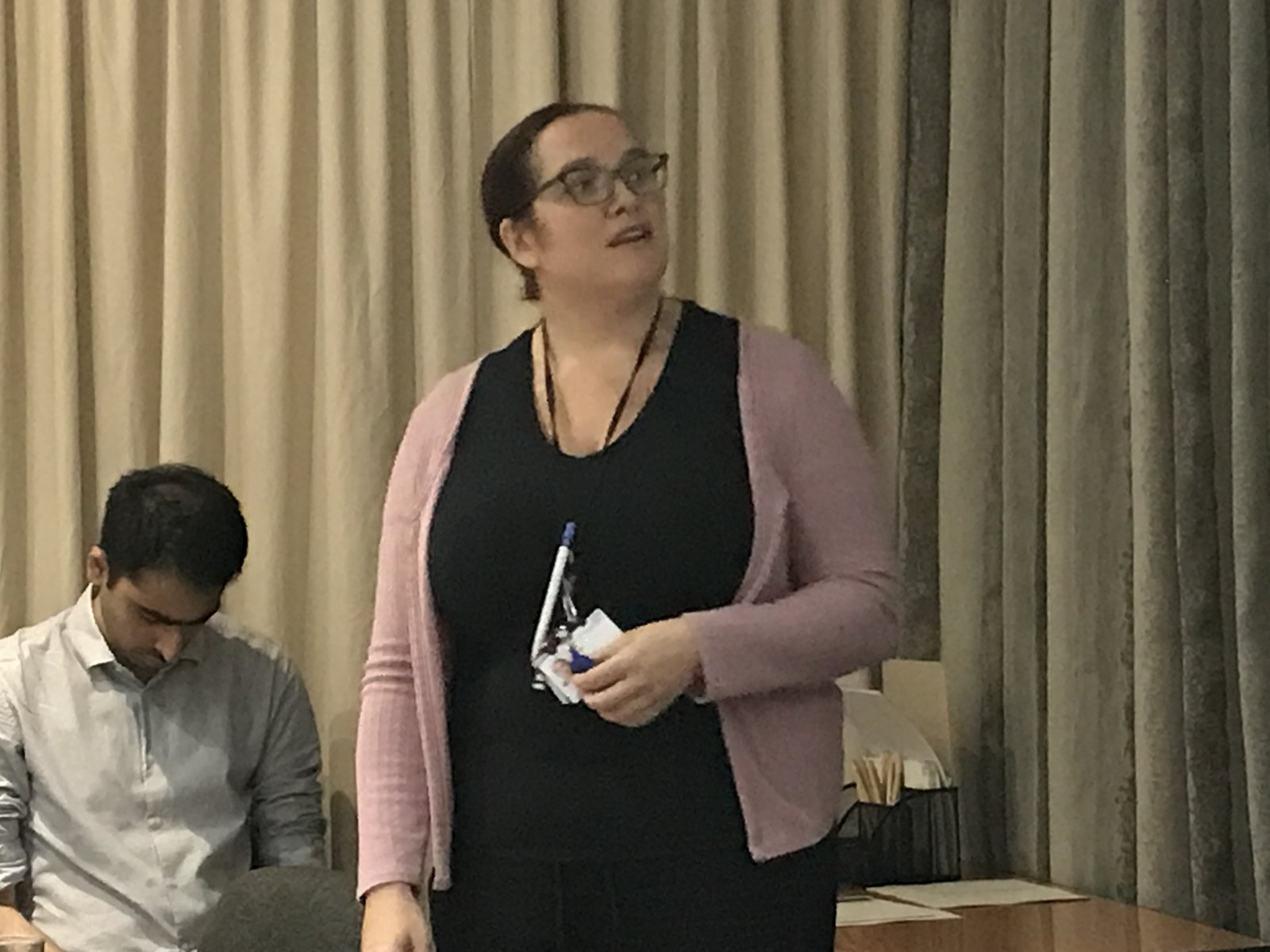
Kathryn Slevin explains what taking part in a clinical trial involves.
After lunch the first speaker was a patient. Patrick Cullen has taken part in one of the group’s research studies. He talked about what led him to say yes, what taking part was like day to day, what the team got right and what it could have done better, and what he would want other patients to know before joining a study. He then took questions from the room. Alisha Whitehead, from the Geoffrey Jefferson Brain Research Centre, gave examples of how patients elsewhere have been involved in research and what came of it. Neurology registrar Hassan Farid gave the last talk. He described a project still being planned and ended with the questions he wanted the tables to answer.
The room then split into three groups by condition. Each table had the same four prompts: which questions about your condition matter most, and what has research missed; what would make it hard to join a patient research group, and what would make it work; how often such a group should meet and in what format; and where the group should look for other people with your condition. Facilitating and taking notes at the tables were Anna Rutherford, Katherine Dodd, Ryan Keh, Hassan Farid and Hannah Smith.
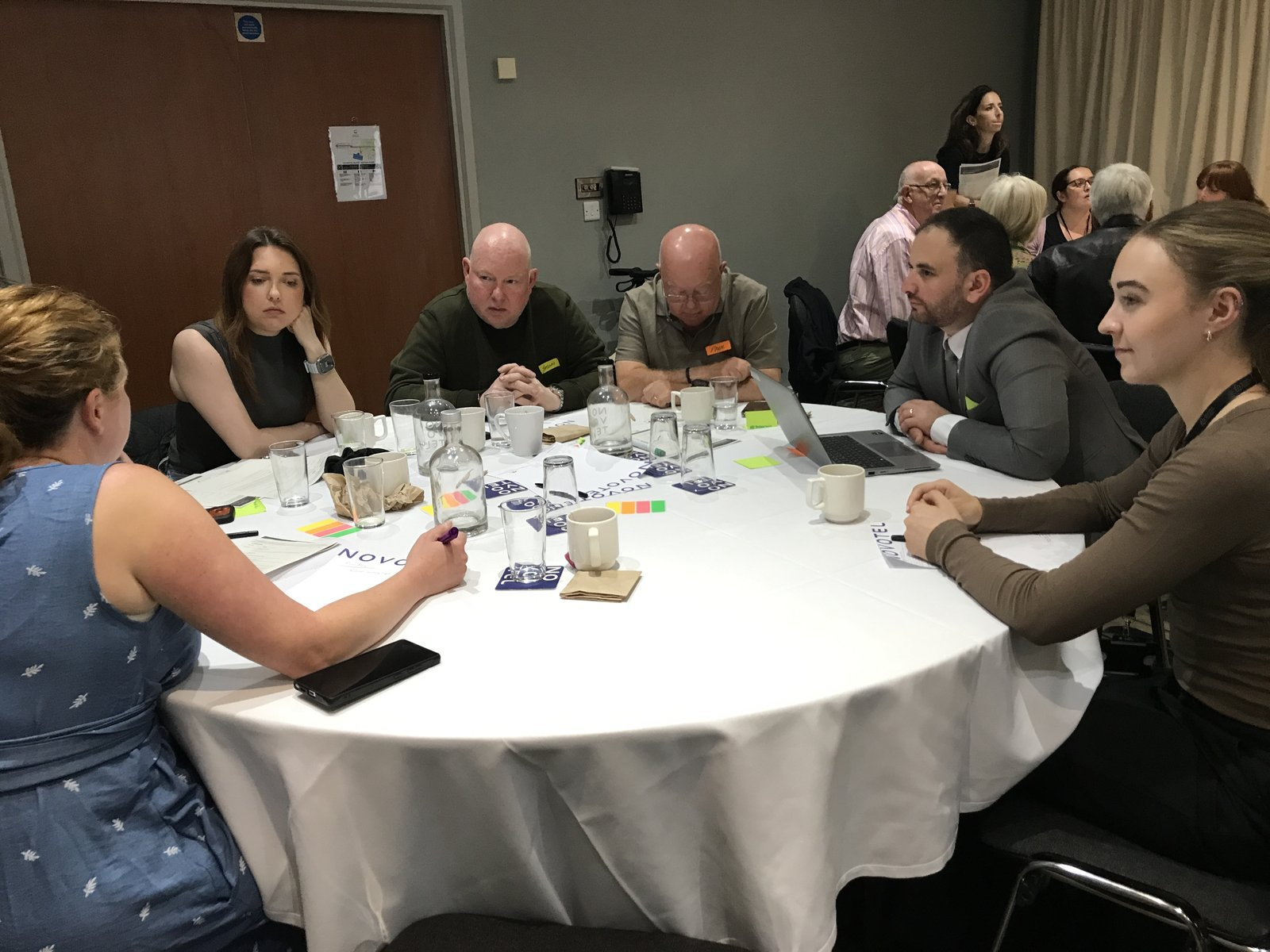
One of the three breakout tables, with a facilitator from the research team leading the discussion and a note-taker recording every point.
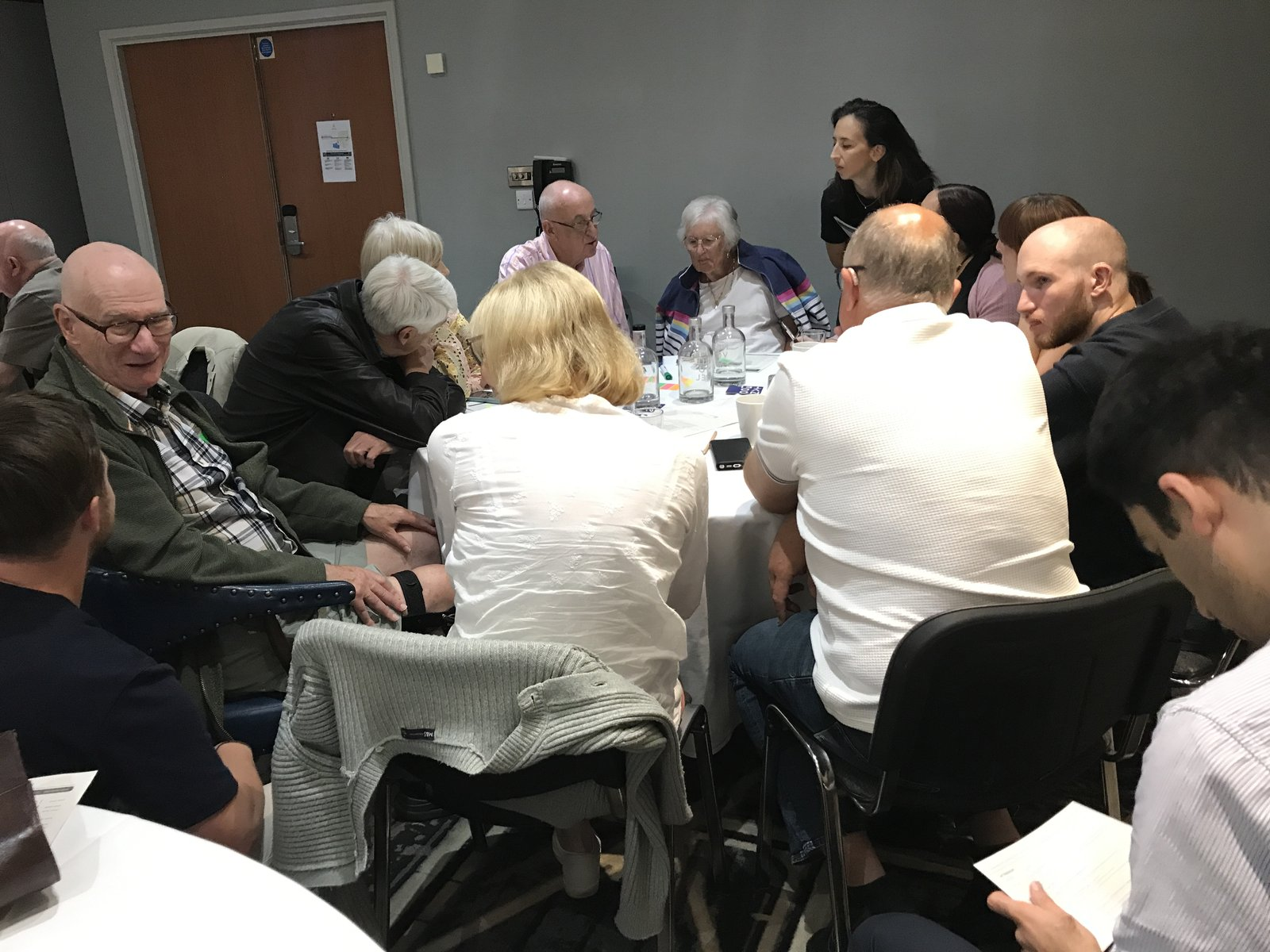
Patients, carers and family members in discussion at a second table.
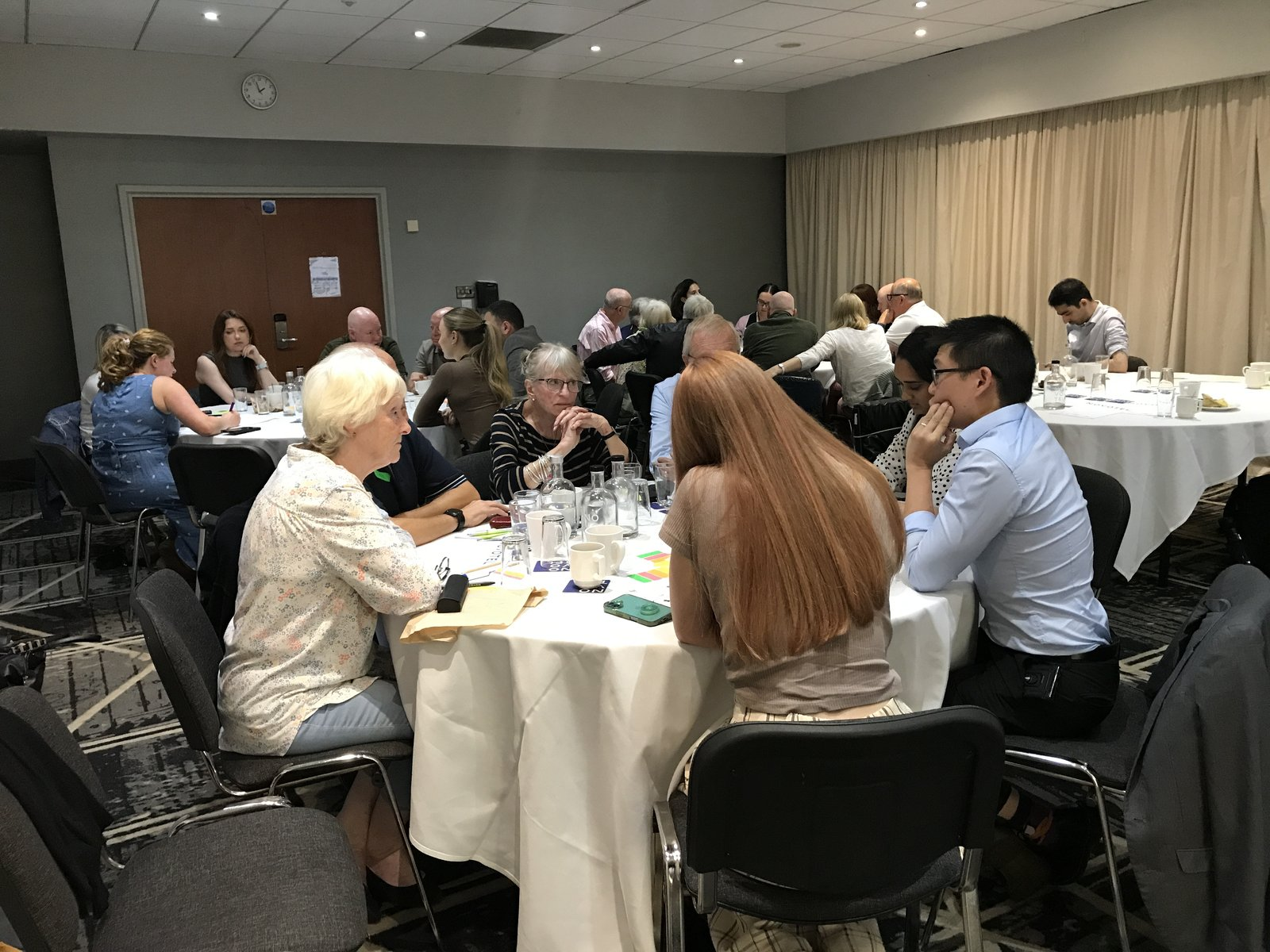
The breakout session under way across all three tables.
When the flipcharts came back to the front, the word at the top of the priorities list was CURE, followed by treatments that stop deterioration. Below that the tables had written about the person rather than the disease: mental health, quality of life, nutrition and exercise. Then the everyday symptoms, pain and fatigue above all, and finally how conditions change over time, including the rarer forms.
On practicalities the tables asked for meetings planned around fatigue, distance, time off work and the school run, with parking and chairs with arms attended to. They also wanted two things together: clear plans, and more people in the room with the same condition. To find those people, they pointed the group to its own clinics first, then to patient registries, the condition charities, online groups and the neuromuscular clinic at Winsford.
The day closed with the group’s proposal for a standing patient and carer research advisory group. It would be drawn from the people present and would meet in the format and at the frequency they had just described. Attendees registered interest before leaving and handed in feedback forms.
On the feedback forms, most asked for the group to meet every three months, in person. Several asked for more people with their own condition next time. Several also wrote, without being asked, about what it meant to know that research into their condition was happening. “Hope! The knowledge that someone is interested,” one wrote. Asked how they would like to help in future, another wrote: “Any way I can.”
The group will be in touch over the coming months about the advisory group, a patient and carer newsletter and the next meeting.